When planning a trip to Everest Base Camp, there is one element of the trip that you simply will never be able to control, and that is the flight to Lukla. You will have trained for the trek, packed your backpack, arranged your accommodation and your acclimatization days. However, once you are ready to take a flight into the Khumbu Valley, it is up to the weather.
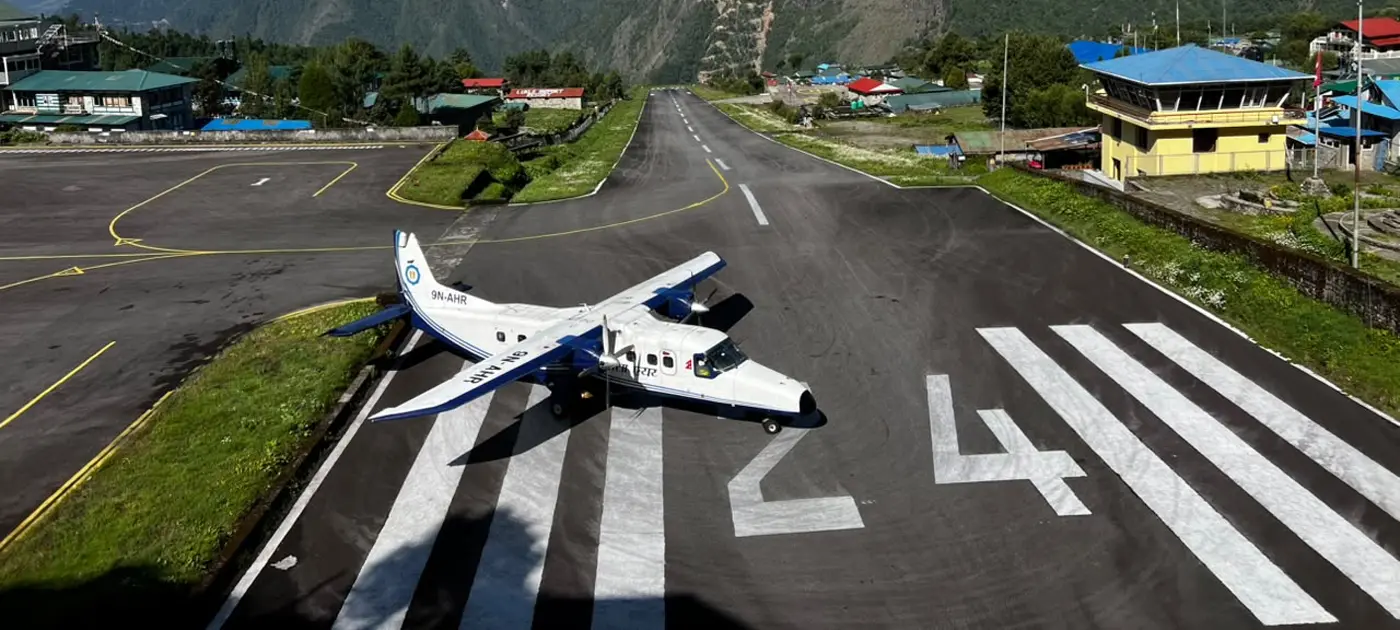
There could be many reasons why your flight to Lukla gets cancelled, cloud, low visibility, rain, wind, unsuitable runway conditions, or bad weather at one end or the other of your trip. Lukla Airport is a place where flights are operated using visual flight rules, according to CAAN data, and the runway in Lukla is listed as being just 527 meters long and 20 meters wide at 2,846 meters elevation. That seems pretty scary, but a cancelled flight doesn’t necessarily mean a cancelled Everest Base Camp trek.
At Altitude Quest, we address Lukla flight uncertainty as a planning issue for the trekking itinerary and not a last-minute issue. We track conditions and advise on flight alternatives and buffer days to prevent one bad weather morning from quickly turning into missing an international flight.
In this article, we'll talk about flight cancellations at Lukla, the effect of delays on your itinerary, what happens after a cancellation, when a helicopter is a reasonable option, how Ramechhap became an alternative destination for Everest trekking flights, and how many buffer days you need in your itinerary.
And the main takeaway is very clear, don't plan your Everest trek based on a perfect Lukla flight schedule. Plan it with the thought that mountains can mess up with the schedule for you.
Why do Lukla flights get cancelled?
Weather conditions and visibility issues can be considered primary causes of flight cancellations, however there can be other reasons:
Low Clouds and Bad Visibility
The airport of Lukla is surrounded by steep mountain peaks of the Himalayas. In case of low clouds or fog which reduce visibility near the airport and on the approach path, pilots might lack the necessary visibility in order to land their flights. As per CAAN's Lukla operational documentation, there are no IFR flights allowed to be conducted at Tenzing-Hillary Airport. Moreover, the Lukla Operating Requirements, according to the documentation, are the conditions for minimum visibility and ceiling. That's why the flight might be canceled even when the visibility in Kathmandu is very good. The weather you see from your hotel window doesn't always equal the weather in Lukla.
Strong Winds
Wind is an important consideration as well. Good visibility does not automatically mean that the flight can take off. High or gusting winds around the airport's runway and the mountains nearby might make the approach unsuitable. CAAN's Lukla operational documentation includes wind conditions among the reasons for flight restrictions in Lukla or aerodrome closure.
Rain
The rain could impair visibility and runway conditions. This would be very relevant during the monsoon season due to the cloudiness, rain and erratic weather in the mountains, making flights less predictable.
Cloud build-up during the Day
Fights to Lukla usually take place based on better flying conditions in the mornings. However, the cloud formation and atmospheric activities increase as the day progresses in the mountain valleys. Hence, a slight delay in the morning could impact the rest of the day's fights. It is one of the reasons why trekkers are often told to report at very early hours for the Lukla flight.
Weather at Kathmandu or Ramechhap
There are actually two sides to the problem. The flight to Lukla needs good weather conditions both at the departure point, en route and in Lukla. So, good weather in Lukla does not automatically mean that your plane will be able to take off from Kathmandu or Ramechhap.
Air Traffic and Delays
In heavy trekking months, there are numerous flights towards the Everest region. CAAN has stated that Lukla flights may surpass 50 per day during high-season, and that Lukla flights occur out of Ramechhap Airport. If weather conditions lead to cancellations, then the next few days will be hectic due to having to accommodate both cancelled flights’ passengers along with regular passengers. This is why a one-day delay caused by weather can turn into a scheduling issue for some time.
How often are Lukla flights delayed?
This is one of the most frequently asked questions by trekkers, and we will provide an honest answer. There is no official CAAN statistic which offers an overall “Lukla Cancellation Rate” throughout the year or throughout any particular season. Sources from the trekking industry mention considerable disruption during peak months, yet their reports vary in terms of season, weather, flights schedule and whether they refer to delays based on number of flights, passengers or trekking days.
That’s why we at Altitude Quest do not suggest you plan a trek according to a certain percentage of delays. Instead, consider it in terms of risk windows:
- Spring: usually fine for trekking, but pre-monsoon cloudiness and unpredictable weather could interfere with flights.
- Monsoon: rainy season and cloudy conditions would make flying difficult and trekking conditions less favorable.
- Autumn: usually one of the best times for the Everest trekking route, though weather disruptions could happen too.
- Winter: cold weather, fog, and snow could disrupt operations.
This is more important than the number: You can expect a Lukla flight to go perfectly according to plan, but you need to make sure you allow enough time to take any delays into consideration.
What if your flight to Lukla gets cancelled?
It can be quite baffling for you if it’s your first time to experience this situation. Your trekking company or airline will usually tell you about the flight cancellation and your next possible course of action.
Depending on the situation, your options may consist of:
- Waiting for the next flight.
- Booking yourself into a flight at a later date.
- Boarding a helicopter if the weather permits.
- Traveling via an overland route towards the Everest Region.
- Modifying the trekking plans.
The main point here is that you should never rush to decide. If you are going on your trek with us from Altitude Quest, we can assist you in figuring out what suits your trekking itinerary best. A cancellation of your Lukla flight is definitely disappointing, but it doesn’t necessarily mean the end of your trek.
What if your flight is cancelled for more than one day?
This is where good itinerary planning comes in handy. Let's say your initial itinerary was like this:
Day 1: Kathmandu to Lukla
Day 2: Phakding to Namche
Day 3: Acclimatization at Namche
If your flight to Lukla gets canceled on Day 1, your schedule changes as a whole. At that point, you may have to consider options such as waiting another day, taking a helicopter, changing your trek route, reducing sightseeing of lower elevations, acclimatization options, or modifying your return itinerary. This is why an experienced trekking company looks at your entire trip duration, and not just the trek days.
What should you do if you miss your itinerary?
First, there is no need to panic. The trekking guide should review the trekking schedule considering how many days you have actually lost. For instance, losing one day prior to arriving at Lukla will not require any changes in your trekking itinerary. However, losing two or three days can become a reason for discussing your itinerary changes with the guide.
In case of the standard EBC trekking itinerary, the primary task for you will always be: safe acclimatization > getting to Base Camp as fast as possible.
Never try to make up for a missed flight by transforming your trekking days into very long ascents. As Nepal Tourism Board’s safety guidelines say, in the case of mountain trekking, you should pay special attention to: gradual ascent and symptoms of the acute mountain sickness over 2,500 metres. This issue becomes especially relevant in the case of delayed flights.
Can you take a helicopter to Lukla?
Sure, a helicopter can act as an alternative to fixed wing flights, if the weather is favorable and there is a helicopter available. This is a key difference: A helicopter is an alternative, not a guarantee of good weather.
Furthermore, the CAAN’s operational documents related to Lukla also list different requirements for visibility for helicopter flights, proving that helicopters also require favorable weather conditions.
While helicopters offer more flexibility, they are much more costly and less available when many trekkers are affected by the same weather conditions. Use of a helicopter may be justified if:
- you have lost one or several days,
- your international departure is close,
- the trekking trip is time sensitive,
- there are multiple cancellations of fixed wing flights,
- or if you chose a helicopter-supported trip in particular.
Before taking a helicopter transfer, check the following issues with your travel agency:
- weather conditions,
- availability of the helicopter,
- overall cost,
- sharing of the passenger seat,
- baggage restrictions,
- conditions of cancellation and refunds, and
- details of departure and arrival locations.
What about Ramechhap Airport?
The most important change that you need to keep in mind as a prospective trekker is that your Lukla flight may not depart from the city of Kathmandu. Most of the flights destined for Lukla during peak trekking months depart from Ramechhap Airport (also called as Manthali Airport). It is done to manage the huge volume of domestic flights operating in peak trekking months.
As a trekker, it will mean that your journey to Lukla will start a lot earlier than you expect. Not only will you have to leave your hotel and head to Kathmandu airport but you will have to leave early in the morning and take a road trip to Ramechhap airport. Thus, your journey pattern will be:
It was reported by CAAN that during peak months, more than 50 Lukla flights have departed from Ramechhap daily. The exact departure location of the plane depends on the season, airline and current airport operations, so make sure to verify your departure point from the trekking agency.
For anyone who travels with us at Altitude Quest, this is one of the critical points to consider as part of the pre-trek briefing. You must know where your flight departs from, at what time you should depart from Kathmandu, and how you will go to Ramechhap on the road.
Why was Ramechhap Airport introduced?
The issue of using Ramechhap as a departure point for Lukla flights is tightly associated with airport capacity management and air traffic management around the city of Kathmandu when many trekkers are heading towards the Everest region.
From the perspective of the trekkers, however, this only means taking another road trip prior to the flight. As the flights from Ramechhap tend to depart early, trekkers have to depart from Kathmandu at early morning hours. Despite the fact that this may stretch the travel day even more, this is now an important part of the Everest trekking logistics during the peak period.
The main thing here is to find out the details of your flight in advance. The trekking company must let you know about the departure point of your flight – whether it is in Kathmandu or Ramechhap.
What weather conditions affect Lukla flights?
Weather is the biggest cause of delays and cancellations for Lukla flights. Being located in mountainous conditions, visibility becomes one of the most important things. Just because you have clear weather in Kathmandu in the morning doesn’t mean it will be possible to land in Lukla.
Visibility issues can arise from low clouds and fogs that will affect your ability to fly through Lukla. The same can happen because of heavy rains during bad weather. Strong winds will also have an impact on flying and any changes in mountain valleys will make it impossible to fly even with the seemingly good weather conditions from the departure point.
That is why trekking tourists cannot rely only on the weather forecast for Kathmandu while checking their flight in Lukla. Good weather should be not only in Kathmandu but along the whole route and at the destination point as well. Weather in the mountains can change really fast so the flight which seemed possible in the morning can be delayed or even cancelled.
Therefore, flights from Lukla are mostly organized based on the better weather conditions in the morning hours. Nevertheless, no matter how perfect the weather is, there is never a 100% guarantee that a particular flight will depart. The decision is always made based on current conditions and professional expertise.
How many buffer days should you keep in case of Lukla flight cancellations?
When considering a trek to the Everest Base Camp, adding buffer days into the itinerary is one of the easiest ways to make sure your schedule is secure from any potential flight problems. One buffer day allows for dealing with some delays or cancellations due to the weather. Nevertheless, even this extra day may not be enough to compensate for a prolonged period of bad weather conditions.
In most cases, it is advisable to plan at least two flexible days, particularly when an international flight is included in the schedule and can hardly be changed at all. In case of an especially tight schedule or an important international connection, one more flexible day can bring additional comfort.
The choice of the exact number of buffer days is determined by your general schedule, dates of traveling and additional flexibility after the trek.
When you put your buffer days also plays a major role. You will find it safer to have flexibility towards the end of your Everest trek than to plan your international flight immediately after your return from Lukla.
Never connect your international flight directly to your Lukla return
Another mistake that is made often by trekkers is when they schedule their international flight in line with their flight from Lukla to Kathmandu. Although this appears to be efficient, it poses a great risk since your Lukla flight might also get delayed or even be canceled due to the bad weather conditions.
For instance, suppose that your Lukla trek ends in the morning and your international flight is supposed to take off in the evening of the same day. In case your flight is delayed, it becomes highly likely that you will miss your international departure flight in Kathmandu.
A far better way is to make sure that you travel from Lukla to Kathmandu at least a day ahead of your international departure date. Two buffer days can work even better if possible. This will ensure that you are not left stranded due to delays or cancellation of the mountain flight which might otherwise affect your international journey.
What if you are already in Lukla and the return flight is cancelled?
The situation when you have already arrived at Lukla and your return flight is cancelled is especially difficult, because you are already in the mountains and have probably started thinking about the international flight home. The first step that you should undertake is to stay in touch with your guide or trekking agency and learn what the situation is now.
In case the weather will improve soon, waiting until the next flight becomes available could be the easiest solution. If you have lost precious time and the time of your international flight is coming close, a helicopter can be taken into account if the weather permits it and there is a helicopter available.
Also, there could be overland ways to go home, but it could not be an urgent solution as well. Overland travel back from the Everest region could take much longer and the current state of trails, roads and transportation should be assessed.
It all depends on your remaining time, weather and available means. Instead of rushing and making a hasty decision, it is advisable to discuss the situation with your guide or trekking agency.
Does a Lukla flight cancellation mean your Everest Base Camp Trek is ruined?
Not necessarily. It might be disappointing to have a Lukla flight cancelled but it certainly doesn’t mean your Everest Base Camp trek will be completely ruined. That is precisely why experience agencies like Altitude Quest always encourage you to add flexibility to your itinerary right from the start.
The Everest region is a mountainous area and the weather is uncontrollable and unpredictable. The best itinerary for any trek should allow you some flexibility because delays are unavoidable in a trekking itinerary and it should be prepared in such a way that you’ll be able to manage them without putting too much rush in your trek.
It’s not about eliminating all potential delays from your trek itinerary but rather making sure that a small delay doesn’t become a bigger one. With appropriate buffer days and a good plan in place, the disruption caused by a flight cancellation will be minimal.
Conclusion
The Lukla flights are one of the most critical aspects of trekking in Everest Base Camp, yet at the same time, it is one part of your trekking experience that you can never fully control. Unexpected weather, poor visibility, wind and other factors may affect the flights, making the trip delayed or canceled in quite a short notice. Therefore, it is much more effective to stop worrying about everything that could possibly happen and try to be prepared for the worst case scenario even before your trek starts.
Having at least one or two extra days, finding out which airport you will depart from (Kathmandu or Ramechhap), taking your essentials with you and making sure that your international flight does not follow the same day can help a lot. In case the flight gets canceled, your travel agency will guide you on what actions to take further.