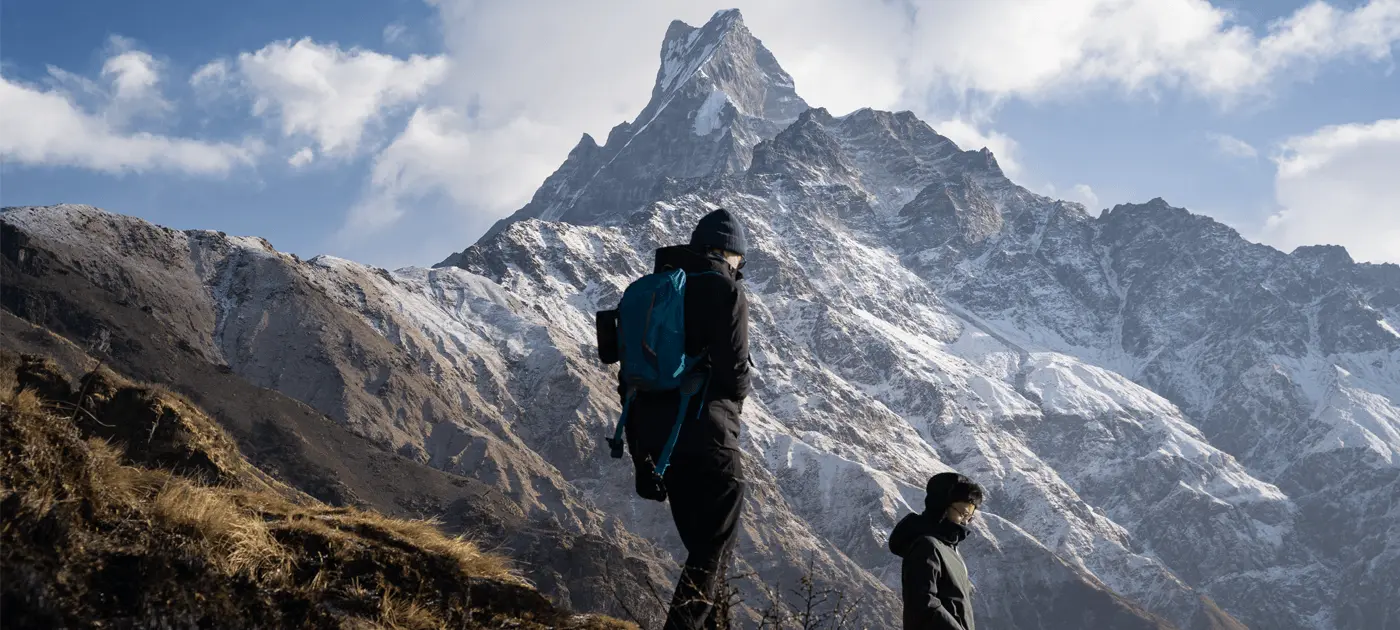
Mardi Himal Trek Itinerary Planning? Get ready for the ultimate guide that will cover all aspects to consider while embarking on Mardi Himal Trek in Nepal. The guide includes information about Mardi Himal and Base Camp altitude, difficulties, length, itinerary, weather, prices, equipment and clothing, and how to cope with altitude sickness, all based on the experience of local trekking experts at Altitude Quest.
The Mardi Himal Trek is one of the best short treks in Nepal that will provide you with amazing scenery of Machhapuchhre (Fishtail), Annapurna South, Hiunchuli, and Mardi Himal without having too many visitors. Even though the hike is categorized as a moderate level trek, the trail goes higher than 4,000 meters and proper preparation and acclimatization are crucial.
Whatever your hiking experience is, be sure to learn more about this beautiful trekking route in our guide. We will give you an insight about daily itinerary, altitude and acclimatization, the best season to trek, and price of the trip.
Highlights of Mardi Himal Base Camp Trek
- Walk on a peaceful and off-the-beaten-path trail lying hidden along the famous Annapurna routes.
- Enjoy close-up views of Machapuchare (Fishtail), Annapurna South, and Hiunchuli from spectacular high ridges.
- Trek through rhododendron forest blooms, rock staircases, and vast alpine meadows.
- Arrive at Mardi Himal Base Camp (4,500m) and feel the sheer scale of the Himalayan giants at your doorstep.
- Recline in cozy, family-run teahouses along the trek with warm hospitality and home food.
- Witness Himalayan wildlife like Danphe (Lophophorus), yaks, and mountain goats in their natural setting.
- Rejoice in heavenly sunrise and sunset views over the Annapurna range from High Camp.
- Ideal for beginners with average fitness, no climbing, no flights required, and readily accessible from Pokhara.
Mardi Himal Trek Elevation
While undertaking the Mardi Himal Trek, you travel from the lower foothills of Pokhara to the high mountains under Mardi Himal and Machhapuchhre. There is a drastic change in the altitude along the trail route which is one of the key factors why acclimatization and appropriate pacing are important.
Most of the trekkers trek up to Mardi Himal Base Camp viewpoint which is around 4,500 meters high but there are some itineraries that talk about the lower Base Camp region at approximately 4,200 meter. Mardi Himal High Camp is usually located at 3,580 meters.
As you start from the lower altitudes, the trail leads you through the forests, villages, ridges, and alpine regions. Once you come closer to High Camp and viewpoints, the atmosphere starts thinning and temperature drops sharply especially in the early morning hours.
Therefore, you should not evaluate Mardi Himal Trek based on its relatively shorter length because high altitude over 3,000 meters makes this trek more physically challenging as compared to any other trek.
Mardi Himal Altitude at a Glance
- Pokhara: 822 m
- Kande: 1,770 m
- Forest Camp: 2,520 m
- Low Camp: 2,970 m
- High Camp: 3,580 m
- Mardi Himal Base Camp / Upper Viewpoint: 4,200–4,500 m
Mardi Himal Base Camp Elevation
The altitude of Mardi Himal Base Camp usually ranges between 4,500 meters (14,764 feet) and some trekking schedules refer to the altitude of 4,200 meters (13,780 feet) as the "Mardi Himal Base Camp".
Getting up to this altitude is one of the main accomplishments of the trek. From the upper ridge of the trail, travelers will be able to admire amazing views of Mardi Himal, Machhapuchhre (Fishtail), Annapurna South, Hiunchuli, and the entire Himalayan region.
The last stage of reaching this viewpoint is more challenging compared to the previous ones. The area is covered by a little vegetation, the trail is more exposed, and there is less oxygen in the air. It is advisable to start the trek earlier in the morning because of the unpredictability of mountain weather conditions and the possibility of better viewing of the Himalayas.
Altitude Sickness at Mardi Himal
One of the critical aspects that need to be considered before embarking on the Mardi Himal Trek is altitude sickness. Despite the fact that this trek is quite short, its route goes up from the lower elevation of Pokhara to more than 4,000 meters, where there is much less oxygen in the air.
The most frequent type of this condition is called Acute Mountain Sickness (AMS). Some of the mild symptoms might include headache, fatigue, dizziness, lack of appetite, nausea, and insomnia. Such symptoms may occur even among those who are physically active and experienced in treks.
Therefore, it is better to take altitude sickness very seriously instead of trying to resist it. In case you experience increasing symptoms, notify your guide about it since going further in such a situation may be risky.
Precaution for Altitude Sickness during the Mardi HImal Trek
- Move slowly and at an easy pace.
- Consume water on a regular basis throughout the day.
- Avoid alcohol consumption during your journey to high altitudes.
- Eat sufficient quantities of food even if your hunger decreases.
- Have enough sleep and avoid unnecessary strain on your body.
- Report any symptoms to your guide immediately.
- Do not go up if altitude sickness is developing.
Acclimatization on the Mardi Himal Trek
Acclimatization provides the ability of your body to slowly get used to low oxygen concentrations during your ascent. Although Mardi Himal does not need an extended acclimatization period due to the short nature of the trek, the steep increase in altitude calls for the right planning of your schedule.
The right itinerary for the Mardi Himal trek will gradually lead to High Camp from the lower forest areas. Sleeping a night at High Camp prior to the morning ascent to the viewpoint is another way of handling the last stretch of the journey in terms of altitude gain.
It is important for your guide to constantly check your condition on the journey and modify the pace or itinerary if required. Fitness cannot stop altitude sickness. Even highly fit trekkers suffer from AMS.
Mardi Himal Trek Distance
However, the distance of the Mardi Himal Trek changes according to the route and the starting and ending points. The uniqueness of this trek lies in the fact that one has to cross through several different terrains over a relatively small distance. While the trek starts in the villages and dense forests, it finally ends at the rhododendron forests, mountain ridges, and finally the alpine terrain of High Camp and the top viewing point.
The daily distance to be covered is feasible for those with average fitness level; however, the daily distance does not reflect the difficulty of that particular day because of the elevation gains, descents, stone path and the change in altitude.
Typical Walking Distance by Time
- Kande to Australian Camp: 2-3 hours
- Australian Camp to Forest Camp: 5–6 hours
- Forest Camp to High Camp: 6-7 hours
- High Camp to Upper Viewpoint and back: 3-4 hours
- High Camp to Low Camp: 3-4 hours
- Low Camp to Siding: 2-3 hours
Mardi Himal Trek Difficulty
The difficulty level of Mardi Himal Trek is moderately rated. It is not an adventurous trekking journey requiring prior experience in climbing skills. Nevertheless, one mustn't underestimate the challenge, as the trail crosses 4,000 meters in height and contains many steep stretches.
The trip may be managed by most healthy travelers possessing at least average level of physical fitness. The problem here is not the overall distance of the path, but the combination of daily walking, ups and downs, difficult conditions of trails, and rising height.
What makes Mardi Himal Trek challenging?
- Elevation: first of all, it is the height factor. The trail passes through the low hills to reach High Camp and go up further to the upper viewpoint, located above 4,000 meters.
- Steep trails: some stretches require constant walking up, especially when approaching Low Camp, High Camp, and the upper ridge.
- Uneven trails: some parts of the way are rocky, slippery, or uneven terrain. The condition gets even harder after the rains or snows.
- Long Viewpoint Day: walk from High Camp to upper viewpoint and back can become one of the longest and tiring days on the whole trek.
- Weather: unpredictable mountain climate.
Who can do the Mardi Himal Trek?
This trek is meant for beginners who have good physical fitness, regular walkers and seasoned trekkers. You must be in a position to hike for about 5 to 7 hours a day on hilly areas.
It does not require you to be an athlete, but you are advised to prepare your body before the trek. Hiking, stair climbing, hill walking, and cardio exercise may come in handy.
Mardi Himal Difficulty Rating
- Overall Difficulty: Moderate
- Technical Climbing: Not required
- Typical Walking: 4–7 hours per day
- Highest Elevation: Approximately 4,200–4,500 m, depending on the route and viewpoint reached
- Fitness Level: Moderate fitness recommended
- Previous Trekking Experience: Helpful but not essential
Best Time for Mardi Himal Trek
The best time to undertake Mardi Himal Trek would be during spring (March to May) and autumn (September to November), which provide the best possible combination of clear mountain views, good weather conditions, comfortable trekking, and clear trails.
However, there could be some other suitable months for trekking through Mardi Himal. The only thing that you need to consider when planning your trip would be your preferences such as good mountain views, blooming forests, few trekkers, or any other preference.
Spring: March to May
This would be one of the best times for Mardi Himal Trek. Lower regions will have a bloom of rhododendrons, which is a national flower of Nepal, while upper regions will have amazing views of Annapurna range and Machhapuchhre.
Walking days are comfortable with cold weather at higher elevations.
Best for: Rhododendron flowers, mountain views, comfortable trekking, and photography.
Autumn: September to November
Autumn is known as the most favorable season for Mardi Himal Trek overall because the weather becomes clearer and drier after the summer monsoon, and the views of mountains become more visible.
October and November are especially preferable due to the stability of the weather and breathtaking Himalayan views.
Good for: Clear sky, panoramic views of mountains, comfortable temperature, and first-timers.
Winter: December to February
Cold weather and chances of snowing in the upper regions characterize this season. Trails can become slippery or covered with snow, especially near High Camp and upper viewpoint.
Nonetheless, winter can be quite picturesque, with clear sky and no crowded trails. It is important for the trekkers in this season to have proper equipment and check the current state of the trail before departure.
Good for: Experienced cold-resistant trekkers, snowy landscape, and quiet trails.
Monsoon: June to August
During the monsoon season there is regular rainfall, cloudiness, high humidity and sometimes muddy or slippery trails. Leeches are common in the lower forest parts.
Panoramic views of the mountains are not reliable, though the trek is possible despite this weather.
Good for: People who do not mind rainy days, less crowding, and green landscapes.
Mardi Himal Trek Itinerary
With an organized Mardi Himal Trek itinerary, the trekkers can explore the different environments at their leisure without being rushed for altitude gain. The usual Mardi Himal Trek duration of most itineraries is between 5 to 7 days, depending on the start point, travel logistics, and extra time spent in Pokhara.
In the case of Altitude Quest, the itinerary recommended by us is one which enables trekkers to acclimatize slowly, gain altitude gradually, and stay overnight at the High Camp.
Basic Altitude Quest Itinerary for Mardi Himal Trek
Day 1: Kathmandu Arrival and Transfer to Hotel
Day 2: Drive from Kathmandu to Pokhara (820m)
Day 3: Drive to Kande & Trek to Pitam Deurali (2,100m)
Day 4: Trek to Rest Camp (2,600m)
Day 5: Trek to Mardi High Camp (3,580m).
Day 6: Hike to Mardi Viewpoint (4,200m) and Mardi Base Camp (4,500m), Back to Low Camp
Day 7: Trek to Siding Village (1,750m) & Drive Back to Pokhara
Day 8: Return Drive to Kathmandu
Mardi Himal Trek Cost
Cost of Mardi Himal Trek is determined by various factors including the duration of the itinerary, number of trekkers, accommodation, transport, guide and porter service, permit, and the season when one decides to make a trip.
Unlike other Himalayan treks that take a longer time in Nepal, Mardi Himal Trek is less expensive due to the reason that it is relatively short in terms of time and does not require costly flight and expensive technical equipment for climbing. However, the cheapest package might not be the best choice since reliable transport, guide, permits, planning, and emergency service is an integral part of a safe trekking experience.
What factors influence the Mardi Himal Trek Cost?
- Trekking Duration: Longer trekking costs more due to additional accommodation, food, guides, and transportation.
- Guide and Porter: The hiring of licensed guide and porter increases the cost of the package, however, it is quite useful as it ensures proper navigation and altitude control.
- Accommodation: This accommodation is a standard practice during the trek. It depends on the cost and facilities of the place.
- Transportation: The cost will depend on private or shared transportation to and fro between Pokhara and trekking trailhead depending upon the package.
- Group: Group participation will lower down the cost per person whereas in private trip there will be more freedom.
- Season: High or low season will decide the cost depending upon accommodation and transportation.
What is Included?
- A typical package of Mardi Himal Trek offered by Altitude Quest includes:
- Airport and hotel transfers as discussed in the itinerary.
- Accommodation in Pokhara and trekking teahouses as per package.
- Experienced English-speaking licensed trekking guide.
- Porter service according to the agreement between the groups.
- Breakfast, lunch, and dinner for the whole duration of trekking.
- Necessary trekking permits and entry fees.
- Ground transportation as per itinerary of trekking.
- Salary of the guide and porter including food, accommodation, and insurance.
- First aid kit carried by the trekking guide.
- Government tax and other charges of services.
- Trek completion certificate if included in the package.
What does not usually include?
- Airfare to/from Nepal.
- Visa fees for Nepal.
- Travel insurance and high altitude rescue insurance.
- Trekking equipment and clothes.
- Snacks, alcoholic drinks, and beverages.
- Purchased drinking water.
- Your personal expenses and WiFi or charger usage fee if there is any.
- Tips to guides and porters.
- Any unexpected costs due to weather conditions or changes in the schedule.
Is it possible to tailor the price of the Mardi Himal Trek?
Yes. The trek can be tailored at Altitude Quest based on your preference in terms of the duration of the trek, group size, mode of transport, need for guides and porters, etc.
The private trek will cost you more than the group departure but will give you full control over your walking pace, rest periods, photo stops, and change in the itinerary if needed.
Tip: While comparing prices for the Mardi Himal trek, make sure to compare what is included in the packages.
Mardi Himal Trek Packing List
Proper packing before the Mardi Himal Trek is vital since the trail goes through warm lower hills, cool forests, and cold high altitude areas. The weather can change abruptly in places such as High Camp and upper viewpoint.
There is no need to pack excessive gear, yet you should consider all types of weather (rain, cold, hot) and altitude.
Required Clothing
- Moisture wicking trekking T-shirts.
- Long-sleeved base layers.
- Comfortable trekking pants.
- Warm fleece or mid layer.
- Down jacket for high altitude.
- Waterproof and wind proof outer jacket.
- Thermal base layers for cold nights.
- Warm hat, gloves, and neck gaiter.
- Multiple pairs of trekking and warm socks.
- Undergarments and sleepwear.
Footwear
The proper footwear makes a significant contribution to making the trekking comfortable.
- Comfortable, broken-in trekking boots with good traction.
- Lightweight camp shoes or sandals.
- Extra shoelaces.
- Gaiters in case of trekking under snowfall or extremely rainy days.
Backpack and Trekking Gear
- Comfortable daypack.
- Duffel bag if a porter is hired.
- Trekking poles.
- Headlamp with spare batteries.
- UV protection sunglasses.
- Water bottles or hydration system.
- Cold climate sleeping bag.
- Waterproof backpack cover.
- Dry bags for electronics and clothes protection.
Essentials for Personal and Health
- Sunscreen and lip balm containing SPF.
- Personal medication.
- First aid kit.
- Treat blisters.
- Sanitizer for hands.
- Toiletries and towels that dry quickly.
- Toilet paper and personal hygiene products.
- Water purifier or water purification tablets.
Electronic devices and Documents
- Mobile phone and charger.
- Power Bank.
- Universal travel adapter.
- Camera and batteries if needed.
- Passport and copies of all important documents.
- Travel insurance information.
- Information about emergency contacts.
Things to Avoid Including in Your Bag
Avoid overpacking as the additional weight on your backpack will be very difficult when climbing the mountainous terrain, even more so during high altitudes. In case you are carrying a porter, store only your basic necessities in the day bag and store other things in your backpack.
Tip: pack considering the seasons. Layering is preferred during spring and autumn whereas you need warmer clothes in winter due to snowfall. In the monsoon season, you need to carry waterproof clothes.
Guide and Porter for Mardi Himal Trek
A professional guide and porter may be hired for the Mardi Himal Trek. Even though the trail is quite short and very popular, rapidly changing weather conditions in the mountains will require your attention, and hiring a guide and porter is a great idea once you get to High Camp or higher viewpoint.
Why hire a guide for Mardi Himal?
While a trekking guide will do a lot more than just show the right direction, an experienced one will know the trail, weather pattern, where you can rest and spend nights, how to avoid altitude sickness and other problems.
Guides' services include:
- Showing the correct path and recommending safe walking routes.
- Setting up the optimal pace of walking for the trekking team.
- Watching out for altitude sickness among the trekkers.
- Communicating with teahouses and booking rooms there.
- Helping with meals and daily trek organization.
- Making decisions regarding sudden changes of the weather and trails.
- Giving information about the village life, traditions and local flora and fauna.
- Organizing all sorts of assistance in case of emergencies.
- If you are new to Himalayan trails, the guide will give you extra peace of mind.
Why Hire a Porter?
Porter will carry your main baggage, and therefore, you can travel with a smaller backpack. It will be especially useful on steep climbs and during the walk from High Camp to the upper viewpoint.
It is better to have all the necessary things such as water, food, rainproof clothes, warm clothes, medication, documents, electronics in your backpack but not in the one that will be carried by the porter.
Altitude Quest offers porter services; at Altitude Quest, porter services should be organized with due respect to the working conditions, load, lodging, meals, and insurance.
Guide or self-guided Trek?
Those who are experienced in trekking can undertake Mardi Himal trek independently, especially during trekking seasons. Nevertheless, there are certain benefits in hiring a guide because of local information, altitude control, logistical services, and rescue if needed.
Those travelers who are not familiar with the trekking system in Nepal or who are going to have their first experience with high-altitude trekking can find it worthwhile to hire a licensed local guide.
Why trek Mardi Himal with Altitude Quest?
A good selection of trekking agencies can make a huge difference in your Mardi Himal adventure. The priority of Altitude Quest is to take you to Mardi Himal Base Camp in a safe, properly organized and pleasant manner.
Local Knowledge
The conditions of the trail, weather, accommodations, and walking time depend on the season. With our local trekking guides, you will receive valuable information on the real conditions of the trail in the Annapurna Region.
Experienced Trekking Guides
Our trekking guides are used to Himalayan trails, know the importance of pacing, hydrating, acclimatizing and keeping altitude at a proper level. Also, trekking guides will tell you interesting facts about local people, landscapes, and the mountainous environment itself.
Safety First
We are sure that a good trek is when you get back home safely after having a fun and pleasant time in the mountains. Our guides keep track of trekkers' state of health, check for symptoms of altitude sickness and advise on rest, itinerary adjustment and descent in case something goes wrong.
Well-Planned Itinerary
Your ideal itinerary must be planned in such a manner as to allow you enough leisure while trekking. The daily walking distance, overnight stop points, transport, and altitude ascension are planned with the overall trekking experience in mind.
Responsible Trekking
Our aim is to promote trekking experiences that are environmentally-friendly by considering communities where we tread, teahouse owners, guide, porters, wildlife and the fragile ecosystem of the Himalayas. Helping the local communities is one of the ways of practicing sustainable trekking in Nepal.
Trekking to Suit Your Expectations
Different trekkers have their own expectations and abilities to trek. No matter what you wish for in your trek, be it privacy, small groups, relaxed or efficient trekking experience, Altitude Quest can help with your Mardi Himal journey.
Frequently Asked Questions about the Mardi Himal Trek
How high is Mardi Himal?
The highest elevation that people usually hike up to during the Mardi Himal Trek is the upper viewpoint at about 4,200–4,500 meters (13,780–14,764 feet), depending on the specific route and viewpoint visited.
How high is the Mardi Himal Base Camp?
Mardi Himal Base Camp is usually referred to as being about 4,500 meters (14,764 feet) high. Some trekking routes call their Base Camps at about 4,200 meters high Base Camps. So, elevation measurements may differ from itinerary to itinerary.
How high is Mardi Himal High Camp?
Mardi Himal High Camp is at an approximate height of 3,580 meters (11,745 feet). This is the highest place where you will spend your night during the standard Mardi Himal Trek.
Is Mardi Himal Trek difficult?
The Mardi Himal Trek is usually rated as moderate. No technical climbing skills are needed but you have to be able to hike both uphill and downhill for many hours. Altitude above 4,000 meters is the main problem you can face here.
Is Mardi Himal Trek suitable for beginners?
Yes, it is. If you have a decent fitness level and are well prepared, you can definitely make this trek. Experience in Himalayan treks would be useful but not mandatory.
Is altitude sickness a problem in Mardi Himal?
Since the trek goes above 4,000 meters, it is possible to have altitude sickness, but not everyone suffers from it. Every trekker needs to understand the symptoms of the illness and take them into account.
How many days will it take to complete the Mardi Himal Trek?
Usually, Mardi Himal Trek takes about 5-7 days depending on the chosen route, point of departure, mode of transport, and the trekker's speed. The additional day will give some slackness in the trip.
How long is the Mardi Himal Trek?
The distance is different for various routes and starting points, but usually it makes 40-60 km (25-37 miles) trekking.
Which is the best time to visit Mardi Himal?
One of the best times to go to Mardi Himal is October and November. Another great time is March-May.
Do I need a porter for Mardi Himal?
While not strictly required, hiring a porter may come in handy if you wish to hike with a light daypack as a porter will carry your luggage while you hike with just your day's necessities.
Is Mardi Himal worth it?
Yes, Mardi Himal trek is definitely worth considering as it offers great opportunities for a relatively short Himalayan adventure with fantastic views of the mountains, beautiful trail hikes through rhododendron forests, teahouse stay, and high altitude hikes above 4,000 meters.
Conclusion
The Mardi Himal Trek promises to be an interesting trek in the Himalayas for adventurers who seek stunning views of the mountains without going on a lengthy adventure. Whether it be the tranquil rhododendron forests, traditional villages, high ridges, and the majestic view of Mardi Himal, Machhapuchhre, Annapurna South, and Hiunchuli, every stage of the trek has its own beauty.
While the trek is a moderate one, the altitude level must not be taken lightly. With the altitude levels reaching around 4,200-4,500 meters, pacing, acclimatization, dressing, proper hydration, and knowledge about altitude sickness become very important. It also depends upon choosing the right season for the trek and getting fit enough for it.
With good planning and the right guides, it promises to be an interesting start for treks in Nepal.